
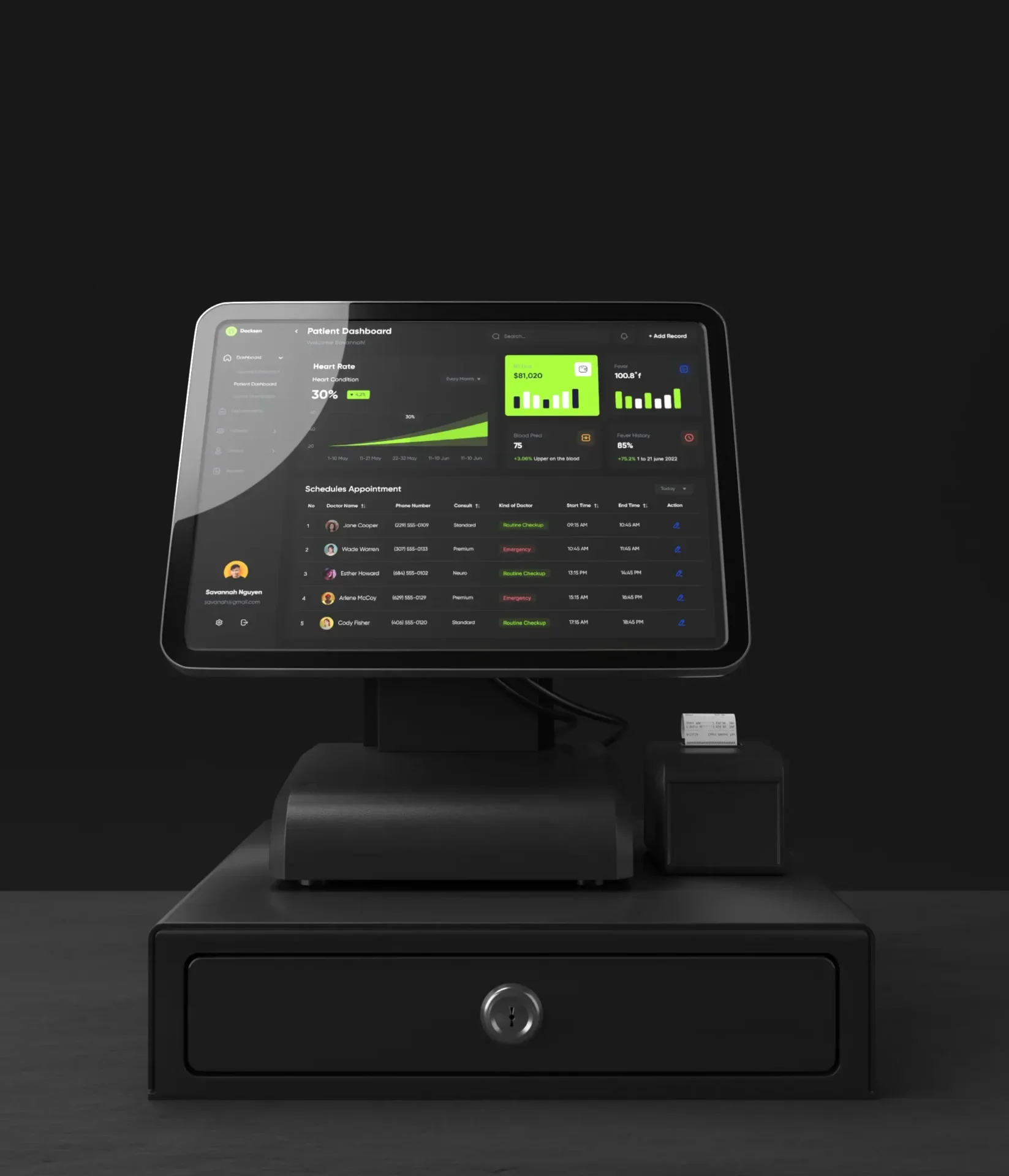


Point Of Sale (POS)
75.000,00 EGP
An Online Point of Sale (POS) System is a cloud-based solution that processes sales transactions, manages inventory, and tracks customer data from any internet-connected device, offering businesses flexibility and real-time insights.
Description
An Online POS, or Point of Sale, system is a software-based solution that allows businesses to process transactions, manage sales, and handle various operational aspects, primarily through a web interface or application. Unlike traditional POS systems that rely on physical hardware and local data storage, online POS systems are typically cloud-based, meaning data is stored on external servers and accessible from anywhere with an internet connection.
Here’s a detailed description of online POS systems:
How Online POS Systems Work:
- Web-Based Interface: The core of an online POS is its user interface, usually accessible via a web browser on a computer, tablet, or smartphone. Employees log in to this interface to initiate and manage transactions.
- Item Selection and Cost Calculation: Customers select products or services, which are then added to a virtual shopping cart within the system. The POS system calculates the total cost, including taxes, discounts, and promotions.
- Payment Processing: When a customer is ready to pay, the online POS processes the payment. For electronic payments (credit/debit cards, digital wallets), it integrates with a payment gateway to authorize the transaction.
- Receipt Generation: After payment, the system generates a receipt, which can be printed or sent electronically to the customer.
- Real-time Data Sync: A crucial aspect of online POS is real-time data synchronization. Sales, inventory updates, and customer information are instantly reflected across the system, regardless of where the transaction originated.
- Cloud Storage: All transaction details, customer information, product listings, and reports are stored securely in the cloud, eliminating the need for local storage and making data accessible 24/7 from any internet-connected device.
Key Features of Online POS Systems:
- Inventory Management: Real-time tracking of stock levels, automatic deduction of sold items, low stock alerts, and often automated reordering capabilities. This helps prevent overstocking or stockouts.
- Payment Processing: Support for various payment methods, including cash, credit/debit cards, mobile payments (Apple Pay, Google Pay), digital wallets, and even invoicing. Secure payment processing with features like encryption and fraud prevention.
- Customer Relationship Management (CRM): Stores customer profiles, purchase history, contact information, and allows for personalized marketing campaigns, loyalty programs, and targeted promotions.
- Sales Reporting and Analytics: Provides detailed reports on sales trends, best-selling products, peak sales hours, customer buying habits, and employee performance. These insights help businesses make informed decisions.
- Employee Management: Tracks employee sales, activity, performance, and can assist with time clocking and scheduling. Allows for assigning different access levels to protect sensitive data.
- Multi-store Management: For businesses with multiple locations, an online POS system allows for centralized management of inventory, sales, and customer data across all stores from a single dashboard.
- E-commerce Integration: Seamlessly connects online and offline sales channels, syncing inventory and customer data between brick-and-mortar stores and e-commerce websites.
- Invoicing and Billing: Ability to create and send digital invoices, often with customization options for branding.
- Mobility: Many online POS systems offer mobile apps that turn smartphones or tablets into portable POS devices, allowing businesses to accept payments and manage operations on the go.
- Security: Incorporates robust security features like data encryption, two-factor authentication, and user access controls to protect sensitive business and customer data.
- Scalability: Easily scales to meet the growing demands of a business, whether expanding to new locations or increasing transaction volume.
- User-Friendly Interface: Designed to be intuitive and easy to navigate, reducing training time for employees and speeding up the checkout process.
Benefits of Online POS Systems:
- Accessibility and Flexibility: Access business data and process transactions from anywhere with an internet connection, offering greater flexibility for businesses with multiple locations, pop-up shops, or mobile operations.
- Cost-Effectiveness: Often involves lower upfront costs compared to traditional systems as it requires less specialized hardware. Many operate on a subscription-based model.
- Real-time Insights: Provides instant access to sales, inventory, and customer data, enabling businesses to make data-driven decisions quickly.
- Improved Efficiency: Automates various tasks, from inventory updates to sales reporting, reducing manual errors and streamlining operations.
- Enhanced Customer Experience: Faster checkout times, diverse payment options, and integrated loyalty programs contribute to a smoother and more personalized customer experience.
- Better Security: Cloud-based systems often have advanced security measures and automatic updates, protecting data from loss, theft, and unauthorized access.
- Scalability and Growth: Easily adapts to business growth and expansion, making it a suitable solution for small startups and larger enterprises alike.
- Reduced Human Error: Automation minimizes the potential for manual mistakes in inventory, pricing, and transaction processing.
In essence, an online POS system modernizes and streamlines business operations by moving critical functions to the cloud, providing businesses with flexibility, real-time insights, and improved efficiency in managing sales and customer interactions.